
Employee First vs. HCM: Which HR Platform Is Right for You?
The meeting has already been going on for 40 minutes. Three proposals for a new HR platform are on the table. Each promises “comprehensive employee management,” “process automation,” and “advanced analytics.” The presentations were polished. The prices are high. The decision is still unclear.
Then someone asks the question that is often overlooked:
“What will this look like for an employee on their first day?”
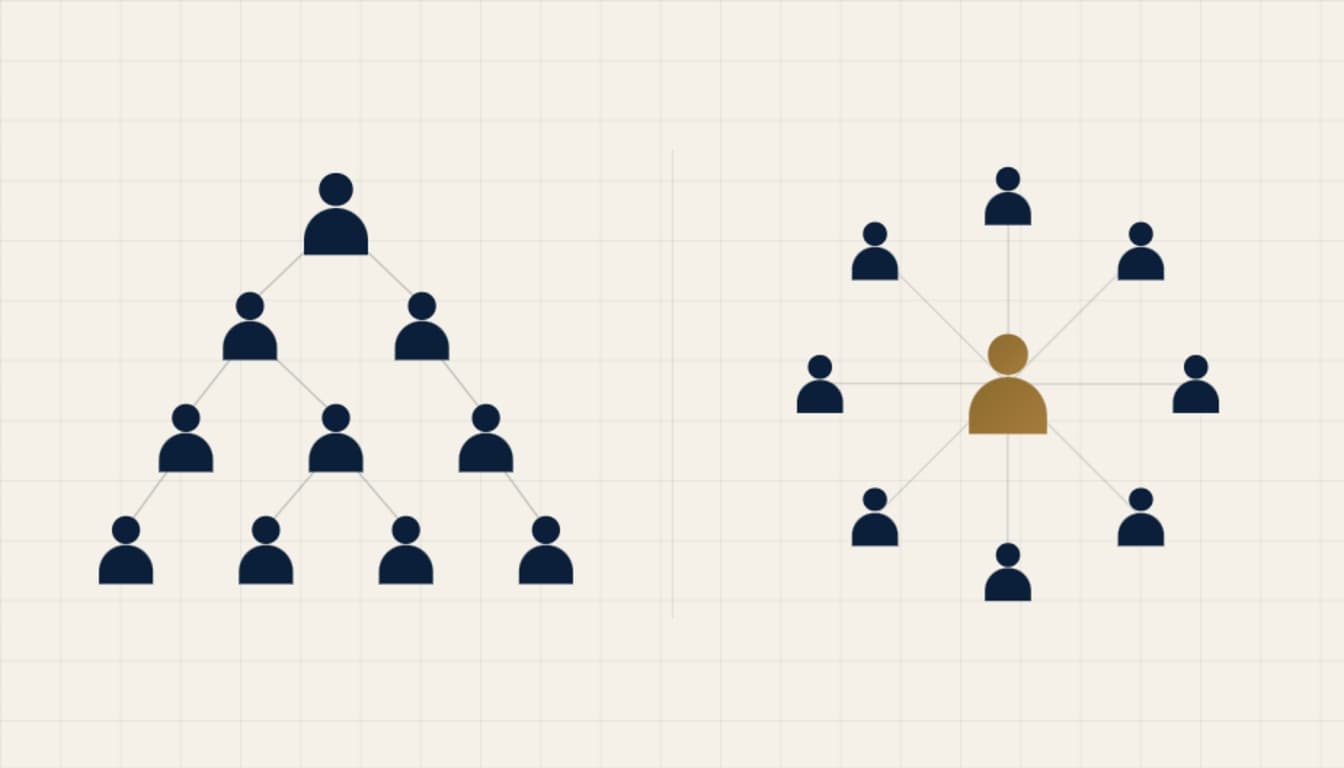
This is where the Employee First approach differs from traditional HCM. Not in features. Not in price. But in whose perspective the system is designed around.
What is HCM, and why was it enough-until now?
HCM (Human Capital Management) has been the dominant approach in HR technology for the past three decades. These systems were designed primarily for HR departments and management: tracking attendance, managing payroll, ensuring compliance, and generating reports for leadership.
At the time, this made perfect sense. When “HR digitalization” meant moving paper files into spreadsheets, HCM was revolutionary.
71%
of employees worldwide are not actively engaged at work, according to Gallup’s global workplace research. Systems designed solely for management-not engagement-do little to change that.
But the labor market has changed. Employee expectations have changed. And companies that still manage people as “capital” rather than individuals are feeling the consequences-in turnover, lower engagement, and difficulties attracting talent.
What does Employee First mean in practice?
Employee First is not a marketing slogan. It is a design philosophy that shapes how a platform is built.
Instead of asking, “How can HR monitor employees?”, it asks, “How do employees experience every step of their journey-from day one to career growth?”
In practice, that means:
Employee self-service as the standard, not an add-on
Employees manage their own leave requests, personal information, and goals-without waiting for HR intervention.
Transparency over control
Employees can see their career path, team goals, and feedback-not just what they are allowed to see.
Onboarding as an experience, not an administrative process
New hires receive a structured, personalized introduction instead of a stack of forms to sign.
Real-time feedback
Not annual performance reviews, but continuous dialogue between employees and managers.
Mobile access without compromise
The system works just as effectively on a smartphone as it does on a desktop-because employees are not always sitting at a desk.
An HCM system tells you where an employee has been. An Employee First platform helps you understand how they feel and where they are going.
HCM vs. Employee First
Let’s look at the key differences through the aspects HR teams and leadership most often evaluate when selecting a platform.

When is HCM still the right choice?
To be fair, HCM systems are not outdated. They remain the right choice in specific contexts.
- Large organizations operating in highly regulated industries such as banking, pharmaceuticals, or the public sector, where compliance is the primary concern.
- Organizations that require global payroll management across multiple currencies and jurisdictions.
- Companies where HR serves as the central administrator of all processes and employees do not directly interact with HR systems.
However, for growing companies competing for talent, investing in culture, and recognizing employee experience as a competitive advantage, HCM alone is no longer enough.
How should you approach the decision?
Before scheduling your next sales demo, ask yourself three questions:
1. Who is the primary user of the system?
If the answer is “the HR department,” you are looking at an HCM solution.
If the answer is “every employee,” you are looking at an Employee First platform.
Both approaches are valid-they simply serve different objectives.
2. How do you measure implementation success?
Reducing HR administrative workload is an HCM metric.
Improving first-year employee retention is an Employee First metric.
Being clear about what success looks like will guide you toward the right choice.
3. What experience do you want new employees to have during their first 30 Days?
Be specific.
From the first login to the first one-on-one meeting with their manager, visualize every step.
Which system supports that journey-and which one gets in the way?
Key insight
The best HR platform is not the one with the most features or the lowest price.
It is the one your employees actually use-every day, willingly.
Because a system nobody opens is not an asset.
It is a cost.
Aplicorn: built with employees in mind
Aplicorn was designed around one simple question:
What does an employee need to feel they are in the right place from day one?
That means structured onboarding tailored to each role.
It means clear goals and regular check-ins with managers.
It means employees do not have to wait for HR to check the status of their vacation requests.
And it means managers have clear visibility into the wellbeing and progress of their entire team-without manually compiling reports.
It is not HCM.
And that is exactly the point.
Next Step
See what employee first looks like in practice
Book a free 30-minute Aplicorn demo and experience the difference through a real-world example tailored to your organization.