
Imagine this scenario: you’ve invested months into finding the right candidate. Interviews, tests, salary negotiations, onboarding paperwork. The new hire starts on Monday, sits down at their desk and… three months later resigns.
This is not an exception. This is the rule.
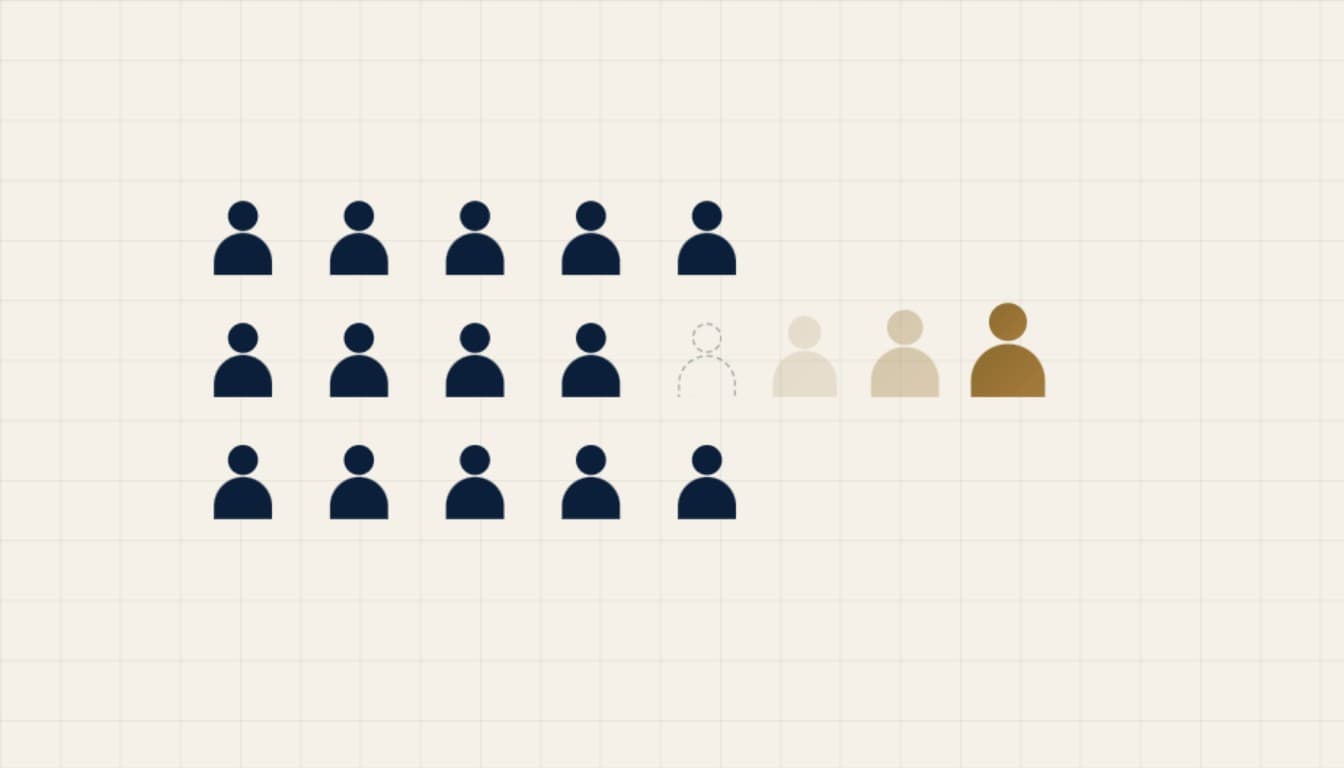
1 in 3
A global HR organization SHRM study shows that every third new employee leaves the company within the first 90 days of employment.
The question is not “could this happen to you?” The question is: is this already happening, but you just don’t see it?
Why do new employees leave so quickly?
The reason is rarely the job itself. Research consistently shows that new employees don’t leave roles - they leave experiences. Specifically:
- Lack of clarity. Nobody clearly explained what is expected of them in the first 30, 60, or 90 days.
- Feeling isolated. They don’t meet the real team and don’t integrate into the company culture quickly enough.
- Broken promises. What they heard in the interview and what they experience in the first month doesn’t match.
- Administrative chaos. Access to systems, equipment, documentation - everything arrives late or in disorder.
- No one checks in. There are no structured conversations during this critical period.
The real cost: more than just salary
When an employee leaves within the first 90 days, the company doesn’t just lose the time invested in hiring. It loses much more.
Direct financial costs
Replacing an employee is estimated to cost 50% to 200% of that position’s annual salary, depending on seniority and industry. This includes advertising, HR effort, onboarding, training, and lost productivity until the new hire reaches full performance.
Hidden organizational costs
- Lower team morale (“why is someone leaving again?”)
- Overload on colleagues who absorb the workload
- Loss of knowledge and context the employee never had time to transfer
- Employer brand damage in the job market (Glassdoor, LinkedIn recommendations)
- Interrupted projects and slower results
Poor onboarding doesn’t end when the employee leaves - the costs continue until you change the system that created it.
Onboarding that fails vs onboarding that retains people
The difference between companies that retain talent and those that constantly lose it is not salaries or benefits. It lies in the first weeks of experience.
Companies with a structured onboarding program report:
- 82% higher retention of new employees in the first year (Glassdoor research)
- New hires reach full productivity 50% faster than those without structured onboarding
- Significantly higher employee engagement in the first months
What does “structured onboarding” mean? It’s not a three-day training and a pile of documents to sign. It is:
- A clear 30-60-90 day plan with concrete goals and milestones
- A mentoring system or buddy for questions and cultural integration
- Regular check-ins (weekly in the first month, bi-weekly in the second)
- Access to all tools, systems, and documentation before or on day one
- Introduction to teams and key stakeholders in the first week
What you can do today
You don’t need to wait for the next hiring cycle to start making changes. Here are three immediate steps:
1. Analyze your own data
Look at how many new hires left within the first 90 days in the past year. Estimate the cost. The number will likely be higher than expected — and strong enough to trigger action.
2. Talk to those who stayed
Ask employees who went through onboarding in the past 6-12 months what worked and what didn’t. These conversations are the cheapest and fastest form of HR research.
3. Map the first 30 days step by step
Create a visual breakdown of what actually happens in the first month. Where are the gaps? Where are new hires left without support? Where does confusion arise? That’s where the problem begins.
NEXT STEP
Your onboarding deserves a better system
At Aplicorn, we help companies design onboarding experiences that retain the right people. Let’s talk about what that could look like for your team.